The Pilates industry has experienced remarkable growth over the past decade, with the global Pilates and yoga studio market projected to reach new heights. For fitness brands, studio owners, and wholesale distributors, offering custom Pilates reformer mats is an excellent way to differentiate your product line and meet the growing demand for specialized fitness equipment.
Unlike standard yoga mats, Pilates reformer mats are specifically designed to fit on reformer machine platforms. They require precise dimensions, superior non-slip performance, and materials that can withstand the repetitive sliding and stretching motions inherent in Pilates practice.
In this comprehensive B2B guide, we will explore everything you need to know about custom Pilates reformer mats — from material choices and sizing options to branding opportunities and sourcing best practices.
Why Pilates Reformer Mats Are Different from Yoga Mats
Many buyers assume a standard yoga mat can serve double duty on a reformer. In reality, Pilates reformer mats are engineered for a completely different set of demands:
- Dimension precision: Reformer mats must fit the exact platform size of popular reformer machines (Balanced Body, Stott, Peak, etc.). Oversized mats interfere with the carriage rails, while undersized ones shift during use.
- Non-slip grip under motion: The constant sliding and spring-loaded movements on a reformer require a mat that stays firmly in place — not just on the floor, but on the reformer platform itself.
- Cushioning without bulk: Pilates involves precise, controlled movements. Too much cushioning reduces stability; too little causes discomfort during supine work.
- Sweat resistance: Hot Pilates and intense reformer sessions generate significant perspiration. The mat surface must wick moisture and maintain grip.
Key Material Options for Pilates Reformer Mats
Choosing the right material is the most critical decision when sourcing custom reformer mats. Below is a comparison of the most common options:
| Material |
Grip Performance |
Durability |
Eco-Friendliness |
Best For |
| PU + Natural Rubber |
Excellent — improves with moisture |
High — resists tearing and deformation |
Biodegradable PU + renewable rubber |
Premium studios, eco-friendly brands |
| PU + Foam Core |
Very good — smooth, non-slip surface |
Medium — foam may compress over time |
Moderate — synthetic materials |
Budget-friendly private labels |
| PVC |
Good — textured surface available |
High — very long-lasting |
Low — non-biodegradable |
High-traffic commercial studios |
| Suede Top + Rubber Base |
Excellent — micro-suede grips without stickiness |
High — premium construction |
Moderate — suede may be synthetic |
Luxury studios, spa environments |
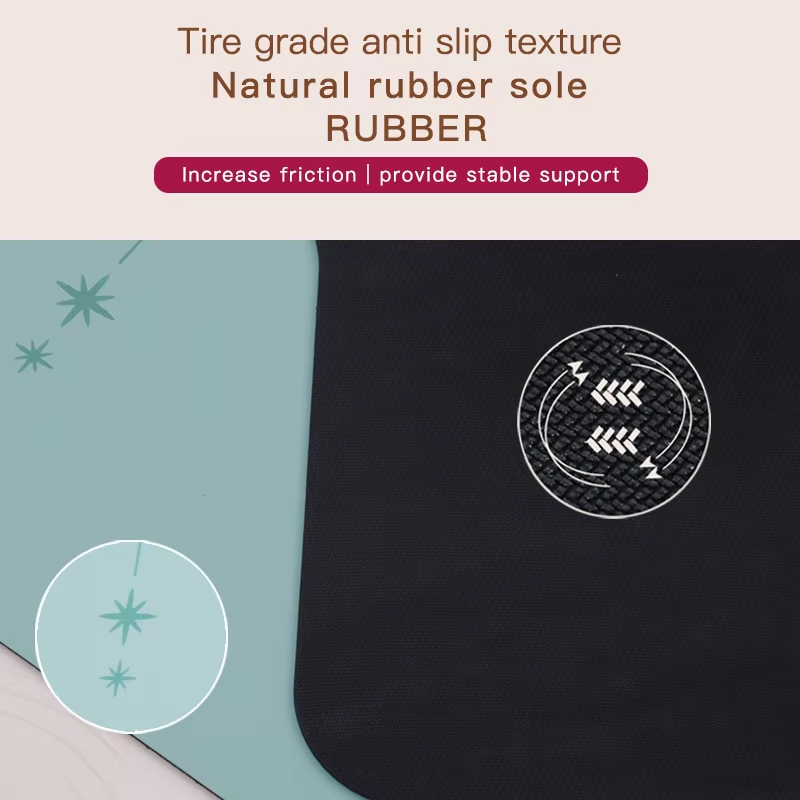
For most B2B buyers, PU + natural rubber offers the best balance of performance, durability, and eco-credentials. The PU top layer provides exceptional sweat absorption and non-slip grip, while the natural rubber base delivers cushioning and floor stability.
Standard Pilates Reformer Mat Sizes
Reformer mat dimensions vary by machine brand. Here are the most common sizes used in the industry:
| Reformer Brand |
Mat Dimensions |
Recommended Thickness |
| Balanced Body (Studio) |
72" × 14" (183 × 36 cm) |
3–4 mm |
| Stott / Merrithew |
72" × 14.5" (183 × 37 cm) |
3–4 mm |
| Peak Pilates |
74" × 14" (188 × 36 cm) |
3–5 mm |
| Generic / Universal Fit |
72" × 14" (183 × 36 cm) |
3–4 mm |
When sourcing custom Pilates reformer mats, always confirm the exact reformer model dimensions with your manufacturer. A well-fitted mat prevents slippage, extends product life, and ensures client safety.
Customization Options for Reformer Mats
One of the biggest advantages of working with an experienced manufacturer is the wide range of customization possibilities:
Logo Printing
Custom logo printing on Pilates reformer mats transforms a functional item into a powerful branding tool. Every time a client uses the mat, they see your studio or brand logo. Options include:
- Screen printing: Cost-effective for large quantities, durable print that lasts
- Heat transfer: Vibrant colors, ideal for detailed logos and gradients
- Embossing / debossing: Subtle, premium look with raised or recessed logo
Color Matching
Custom color matching to your brand palette is available. From neutral studio tones to vibrant accent colors, the PU surface accepts a full spectrum of colors.
Thickness Options
Most Pilates reformer mats range from 2 mm to 6 mm. Thinner mats (2–3 mm) provide better stability and machine feel, while thicker options (4–6 mm) offer extra cushioning for comfort-focused practices.
Edge Finishing
Rounded or tapered edges prevent curling and improve mat longevity. High-quality reformer mats feature precision-cut edges that lie flat on the reformer platform.
Packaging
Custom packaging with your brand design — from individual retail sleeves to bulk wholesale cartons — enhances the unboxing experience and reinforces brand identity.
B2B Sourcing Checklist for Pilates Reformer Mats
When evaluating suppliers for custom Pilates reformer mats, use this checklist to make an informed decision:
- Material quality: Request material samples and test for grip, durability, and odor. Premium PU + natural rubber should be odor-free with a soft, suede-like feel.
- Custom printing capability: Verify the factory can execute your logo design with high color accuracy and durability. Ask for print samples.
- Size precision: Confirm the factory can produce exact dimensions to fit target reformer models. A deviation of even 0.5" can cause fit issues.
- MOQ requirements: Check minimum order quantities. Some manufacturers offer low MOQs (10–50 pieces) for startup brands, while established factories require 500+.
- Lead time: Standard production typically takes 15–25 working days for custom orders. Factor in shipping time when planning inventory.
- Certifications: Look for SGS, REACH, or other relevant certifications that ensure product safety and compliance with your target market regulations.
- Samples: Always order pre-production samples before committing to a full production run. This is the best way to verify quality, fit, and finish.
Why Choose ArchiYoga for Custom Pilates Reformer Mats
With 29+ years of experience in yoga and fitness product manufacturing, ArchiYoga offers a complete turnkey solution for custom Pilates reformer mats:
- Premium materials: We use high-quality PU surfaces combined with durable natural rubber bases for exceptional grip, comfort, and longevity.
- Custom printing: Full-color logo printing, custom color matching, and private label packaging to build your brand.
- Flexible MOQ: We accommodate both small-batch trial orders and large-volume wholesale runs.
- Quality assurance: Every batch undergoes strict inspection before shipment to ensure consistent quality.
- Global shipping: We export to 65+ countries worldwide with reliable delivery options (sea, air, express).
If you are looking to add custom Pilates reformer mats to your product catalog or studio inventory, contact us to discuss your requirements. Our experienced team is ready to help you from design concept through final delivery.
Frequently Asked Questions
Q: Can I use a regular yoga mat on a Pilates reformer?
A: It is not recommended. Standard yoga mats are typically too wide for reformer platforms, which may interfere with the carriage movement or cause safety issues.
Q: What thickness is best for Pilates reformer mats?
A: 3–4 mm is the most popular range, offering a good balance of cushioning and stability. Thinner mats (2 mm) provide better machine feel, while thicker mats (5–6 mm) add comfort for supine exercises.
Q: How do I clean and maintain Pilates reformer mats?
A: Wipe down after each use with a mild soap and water solution. Avoid harsh chemicals that may damage the PU surface. For natural rubber bases, avoid prolonged exposure to direct sunlight.
Q: What is the typical MOQ for custom Pilates reformer mats?
A: MOQ varies by manufacturer. At ArchiYoga, we offer flexible MOQs starting from 10 pieces for sample orders, making it accessible for both small studios and large distributors.
Q: Can I combine Pilates reformer mats with other products in one shipment?
A: Yes. We can combine reformer mats with yoga mats, blocks, resistance bands, and other accessories in a single shipment to reduce logistics costs.
Ready to source custom Pilates reformer mats for your brand or studio? Visit ArchiYoga.com to explore our product range and get a quote today.


 English
 Français
 Deutsch




 IPv6 network supported