Why Material Matters in B2B Yoga Mat Sourcing
Choosing the right yoga mat material is one of the most critical decisions a brand, studio, or retailer can make. The material determines everything — product performance, price positioning, sustainability messaging, and customer satisfaction. For B2B buyers sourcing yoga mats for wholesale or private label, understanding the strengths and trade-offs of each material is essential to selecting the right product for your target market.
In this guide, we compare the three most popular yoga mat materials used in OEM and ODM manufacturing — natural rubber, cork, and TPE — to help you make an informed sourcing decision for your brand.
1. Natural Rubber Yoga Mats
Natural rubber is the gold standard for premium yoga mats. Harvested from the sap of rubber trees, it is a renewable, biodegradable material that delivers exceptional performance.
Key Advantages:
- Superior Grip: Natural rubber provides excellent traction, even during hot yoga or high-intensity sessions. The grip actually improves with moisture, making it ideal for sweaty practices.
- Durability: Exceptionally resilient and resistant to tearing and stretching over time. A natural rubber mat can withstand years of daily studio use.
- Eco-Friendly: Biodegradable and sourced from renewable resources, natural rubber aligns with sustainability goals and green brand positioning.
- Cushioning: Dense yet supportive, natural rubber offers joint protection without sacrificing stability.
- Waterproof Options: Many natural rubber mats with a PU top layer are waterproof and easy to clean.
Considerations:
- Weight: Natural rubber mats are heavier than TPE alternatives, which may affect portability.
- Initial Odor: Some natural rubber mats have a mild rubber smell that dissipates over time.
- Cost: Higher material cost compared to TPE and PVC, positioning it in the premium price tier.
Best For:
Premium studios, professional yoga brands, eco-conscious product lines, and private label programs targeting mid-to-high-end consumers. Natural rubber mats are particularly popular in Europe and North America, where sustainability is a key purchasing factor.
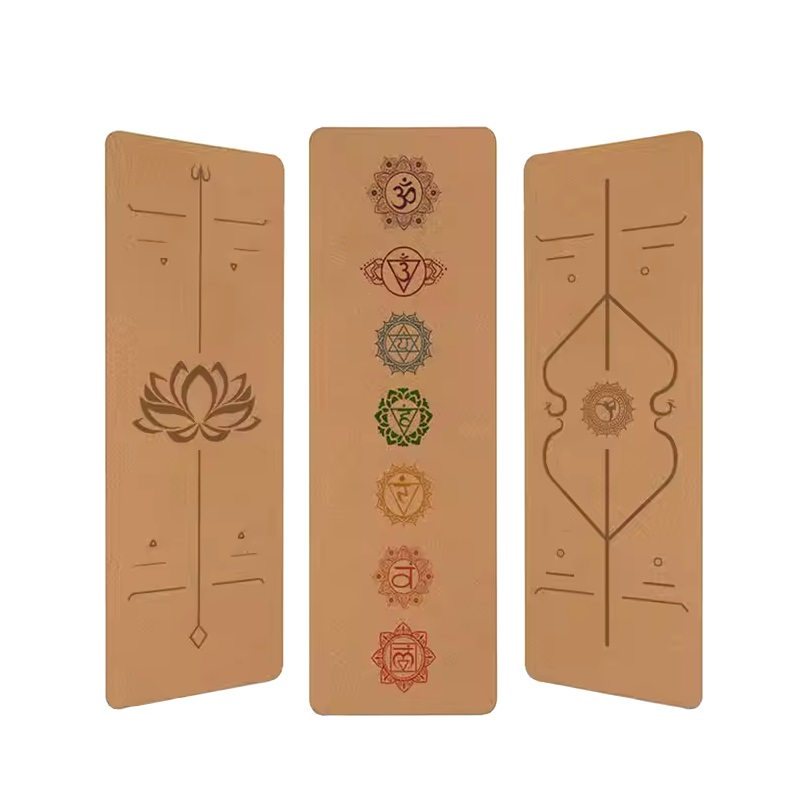
Recycled cork with natural rubber base — a sustainable material combination gaining popularity in the B2B market.
2. Cork Yoga Mats
Cork yoga mats offer a unique combination of natural aesthetics and functional performance. Harvested from the bark of cork oak trees without cutting them down, cork is one of the most sustainable materials available.
Key Advantages:
- Natural Antimicrobial Properties: Cork is naturally resistant to bacteria, mold, and mildew, making it highly hygienic for shared studio use.
- Grip That Improves With Moisture: The cork surface actually becomes grippier when wet, providing excellent traction during hot yoga or intense practice.
- Sustainable & Renewable: Cork bark regenerates every 9–12 years without harming the tree. Combined with a natural rubber base, cork mats are fully biodegradable.
- Odor-Free: Unlike some synthetic materials, cork is naturally odorless.
- UV & Moisture Resistant: Cork does not degrade under sunlight or absorb moisture easily.
Considerations:
- Thinner Profile: Cork mats tend to be thinner (2–4mm), offering less cushioning than PU or TPE alternatives.
- Surface Maintenance: Cork can show wear over time with heavy use, especially if not properly maintained.
- Higher Cost: Cork is a premium material, typically priced above TPE and PVC options.
Best For:
Eco-conscious brands, boutique studios, meditation-focused product lines, and corporate wellness programs. Cork mats are especially popular in Europe, where sustainability regulations are strict and consumer awareness is high.
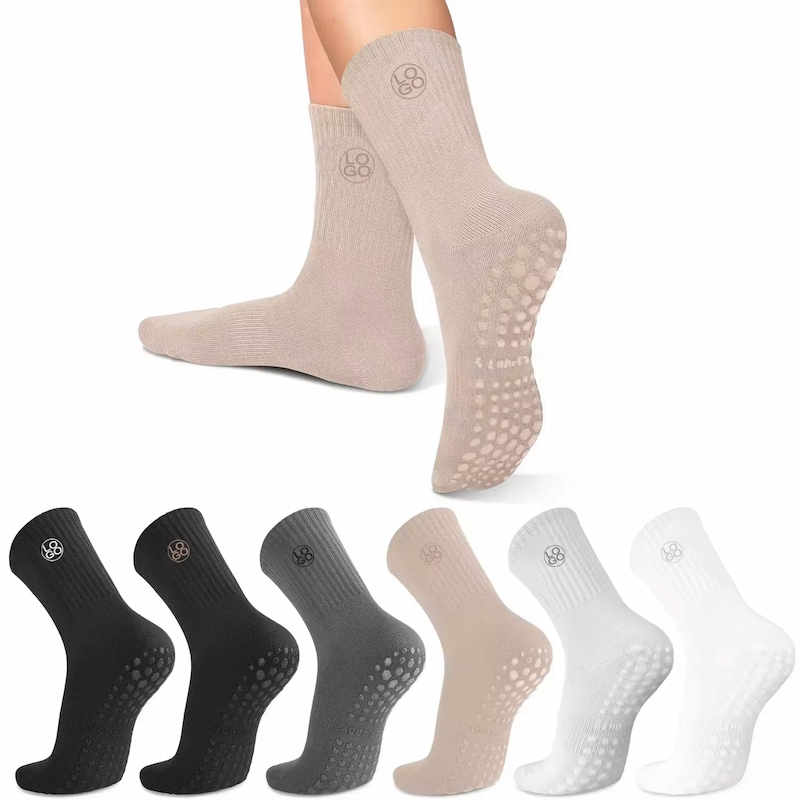
Silicone dot yoga towel — a complementary accessory for hot yoga practitioners and studio add-on sales.
3. TPE Yoga Mats
TPE (Thermoplastic Elastomer) is a modern synthetic material designed to bridge the gap between performance and affordability. It is lightweight, recyclable, and free from latex, PVC, and harmful chemicals.
Key Advantages:
- Lightweight: TPE mats are significantly lighter than natural rubber mats, making them ideal for travelers and commuters.
- Eco-Friendly Profile: TPE is recyclable and free from latex and PVC. Many TPE mats are manufactured using energy-efficient processes.
- Good Cushioning: Available in 5–6mm thickness options, TPE provides adequate joint support for most practice styles.
- Non-Slip Surface: Dual-layer texture design offers reliable grip for yoga, Pilates, and stretching.
- Affordable: Positioned at a mid-range price point, TPE is accessible for budget-conscious buyers without sacrificing quality.
- Odorless: Unlike PVC, TPE mats have no chemical smell.
Considerations:
- Less Durable: TPE mats may show wear faster than natural rubber under heavy commercial use.
- Lower Grip: While good for general practice, TPE grip does not match the performance of natural rubber or cork in hot, sweaty conditions.
- Not Fully Biodegradable: TPE is recyclable but not biodegradable like natural rubber or cork.
Best For:
Entry-level and mid-range product lines, hotel and corporate wellness programs, promotional giveaways, and brands targeting younger, budget-conscious consumers.
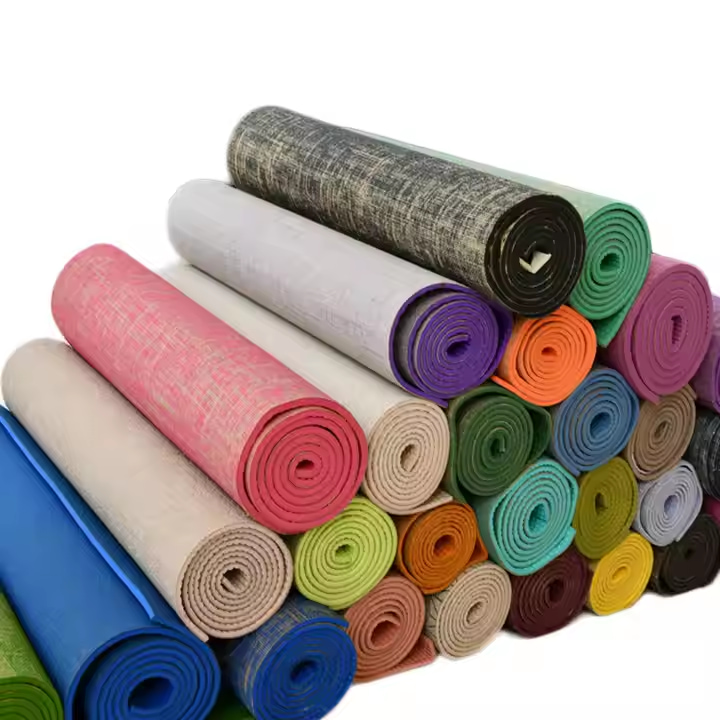
Jute and natural rubber yoga mat — a textured natural fiber option for eco-friendly product ranges.
Material Comparison Table
| Feature |
Natural Rubber |
Cork |
TPE |
| Grip Performance |
★★★★★ Excellent |
★★★★☆ Very Good |
★★★☆☆ Good |
| Durability |
★★★★★ Excellent |
★★★☆☆ Good |
★★★☆☆ Good |
| Eco-Friendliness |
★★★★★ Excellent |
★★★★★ Excellent |
★★★☆☆ Good |
| Weight |
Heavy (2.5–3.5 kg) |
Medium (1.5–2.5 kg) |
Light (1.0–1.5 kg) |
| Price Tier |
Premium |
Premium |
Mid-Range |
| Biodegradable |
Yes |
Yes |
Recyclable Only |
| Best Climate |
All climates |
Warm/dry preferred |
All climates |
| Custom Logo Options |
Silk screen, embossing, UV |
Laser engraving |
Silk screen, embossing |
How to Choose the Right Material for Your Brand
When selecting a yoga mat material for your B2B order, consider these factors:
Target Market & Positioning
Premium brands targeting eco-conscious consumers in Europe or North America should prioritize natural rubber yoga mats or cork mats. These materials command higher price points and align with sustainable lifestyle messaging.
For entry-level or promotional product lines, TPE mats offer a balanced combination of performance and affordability that appeals to budget-conscious buyers.
Usage Environment
| Environment |
Recommended Material |
Reason |
| Hot Yoga Studio |
Natural Rubber + PU |
Best sweat absorption and grip |
| Meditation / Gentle Yoga |
Cork + Natural Rubber |
Natural aesthetics, comfortable surface |
| Home Practice |
TPE or Natural Rubber |
Balance of comfort and affordability |
| Corporate / Hotel Programs |
TPE |
Lightweight, cost-effective, easy storage |
| Travel / On-the-Go |
TPE or 1mm Suede + Rubber |
Ultra-lightweight and foldable |
Budget & MOQ Considerations
- Premium Tier (Natural Rubber / Cork): Higher unit cost but stronger brand perception, higher retail margins, and loyal customer base.
- Mid-Range Tier (TPE): Lower unit cost with flexible MOQ options, ideal for testing new markets or running promotional programs.
- Mix Strategy: Many successful brands offer a material range — premium rubber mats for their core line and TPE mats for entry-level or promotional SKUs.
Customization Options by Material
| Customization Feature |
Natural Rubber |
Cork |
TPE |
| Logo Printing |
Silk screen, UV, embossing |
Laser engraving |
Silk screen, embossing |
| Color Matching |
Pantone matching available |
Natural cork color; base rubber color |
Full Pantone matching |
| Size Customization |
Wide range (arch, oval, round, rectangle) |
Round (65cm) standard |
Standard + custom sizes |
| Packaging |
Custom box, bag, sleeve, eco packaging |
Custom box, eco-friendly wrap |
Custom box, bag, or bundle |
Why Source Yoga Mats From ArchiYoga?
With 29+ years of manufacturing experience and exports to 65+ countries, ArchiYoga is a trusted B2B partner for yoga and fitness products worldwide. Whether you need natural rubber, cork, or TPE yoga mats, we offer:
- Full OEM/ODM Support: From concept to finished product, our team guides you through design, sampling, and production.
- Custom Logo & Branding: Silk screen, embossing, UV printing, and laser engraving options tailored to your brand.
- Flexible MOQ: Small batch orders available for startups and boutique brands, plus bulk pricing for large-scale retail programs.
- Quality Assurance: Strict quality control and international compliance certifications.
- Global Logistics: Reliable shipping to Europe, North America, Australia, and beyond.
Ready to develop your yoga mat line? Contact ArchiYoga for a consultation and customized quote for your next private label or wholesale order.
Frequently Asked Questions
Q1: Which yoga mat material is best for hot yoga?
Natural rubber with a PU top layer offers the best grip for hot yoga. Cork is also an excellent choice as its grip improves with moisture. TPE works for moderate perspiration but may not perform as well in high-sweat conditions.
Q2: Are cork yoga mats waterproof?
Cork is moisture-resistant, not fully waterproof. However, when combined with a natural rubber base, the mat provides excellent moisture resistance and is easy to clean.
Q3: What is the MOQ for custom branded yoga mats?
At ArchiYoga, our standard MOQ starts at 10 pieces. Contact us for your specific requirements.
Q4: Can I mix different materials in one shipment?
Yes. We can combine natural rubber, cork, TPE, and other yoga products into a single consolidated shipment.
Q5: How long does sample production take?
For existing samples, 3 working days. For custom branded samples with logo printing, approximately 7 working days.
Q6: Which material is the most eco-friendly?
Both natural rubber and cork are fully biodegradable and sourced from renewable materials. TPE is recyclable but not biodegradable. For maximum sustainability, natural rubber and cork are the best choices.


 English
 Français
 Deutsch



 IPv6 network supported